
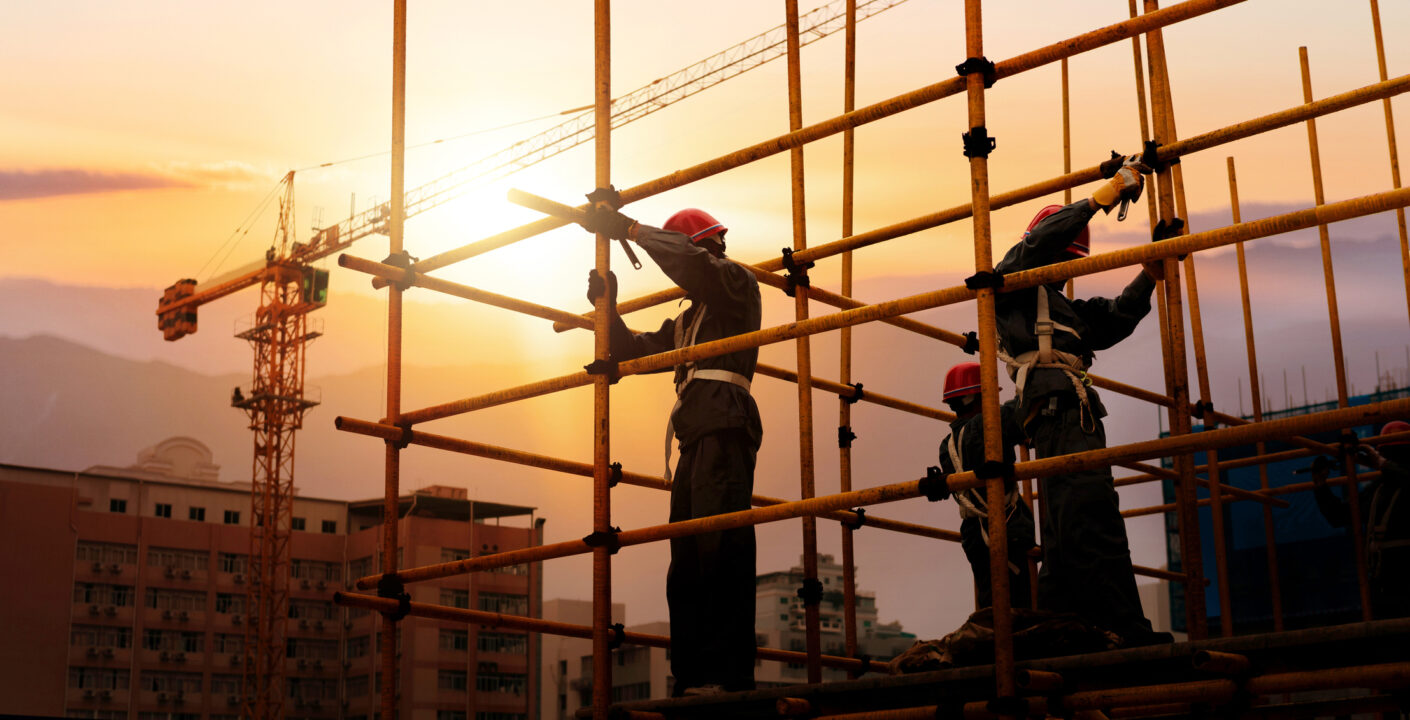
Your scaffolding isn’t just equipment—it’s what stands between your crew and the ground. No second chances. No do-overs.
Supported scaffolding systems start on solid ground and builds up. Loads are transferred directly down through rigid supports, giving workers the stable platform they need for everything from light maintenance to heavy structural work.
At Malta Dynamics, we’ve seen every type of scaffolding system in action, from single-pole setups on residential jobs to complex system scaffolds on high-rise projects. We know what works in the real world because our fall protection gear rides on these same systems every day, keeping crews safe when scaffolding is their lifeline to getting home.
Let’s break down the 10 most common supported scaffolding systems—and how to choose the right one for your next project.
The 10 Types of Supported Scaffolding
1. Single Scaffolding (Bricklayer’s Scaffolding)
Single scaffolding consists of a single row of vertical posts holding up horizontal ledgers. Often called bricklayer’s scaffolding, this system relies on the building wall for lateral support, making it the simplest supported scaffold configuration.
When to Use:
- Residential brick work under 20 feet
- Quick maintenance jobs with minimal gear
- Tight spaces where full system scaffolds won’t fit
Key Benefits: Fast setup and low initial cost make this system ideal for straightforward applications.
Limitations: The narrow 2-foot deck requires frequent material trips and this system requires additional ties at greater heights to prevent wind sway.
2. Double Scaffolding (Mason’s Scaffolding)
Double scaffolding, also known as Mason’s Scaffolding, uses two parallel rows of posts connected by cross-members and ledgers. Mason’s scaffold offers a wider deck and greater load capacity, making it the standard choice for heavier brick or stone work.
When to Use:
- Heavy masonry or stone work
- Multi-trade operations requiring workspace for multiple crews
- Jobs where material staging on the deck improves workflow
Key Benefits: Wider, stronger decks improve efficiency by providing more space for materials and workers to move without congestion, reducing the need for multiple trips.
Limitations: Setup takes longer and costs more than single scaffolding, but the efficiency gains during the job typically justify the investment.
3. Mobile Scaffolding
Mobile scaffolding consists of scaffold towers on wheels that roll from one work station to the next. Once positioned correctly, operators lock the wheels for maximum stability during work operations.
When to Use:
- Warehouse ceiling work and lighting installations
- Large-scale paint jobs covering extensive interior spaces
- Projects requiring frequent repositioning
Key Benefits: Set up once, work everywhere. For jobs that move around, mobile scaffolds eliminate the setup-teardown cycle that reduces productivity.
Limitations: Height limits matter with this system. Most mobile units max out around 15-20 feet before they require outriggers or stabilizers for safe operation.
4. System Scaffolding
System scaffolding uses factory-made components with standardized connections that lock into place quickly and securely. This category includes several specialized subtypes, each designed for specific applications.
Ringlock Scaffolding
Design Features: Ringlock scaffolding features standards with rosettes at each connection point, allowing workers to lock in ledgers at multiple angles. Spring-loaded wedges hold firm even under heavy loads.
When to Use:
- Curved buildings or irregular structures
- Heavy loads that exceed other systems’ capacity
- Projects with compressed timelines
Key Benefits: Maximum geometric flexibility with exceptional load capacity.
Cuplock Scaffolding
Design Features: Cuplock scaffolding relies on top and bottom cups around each standard. Workers simply tap the ledger down into the cups until it locks—no bolts or tools required.
When to Use:
- General construction where speed and strength both matter
- Repetitive bay layouts
- Crews that need rapid assembly and disassembly
Key Benefits: Tool-free connections speed up rigging operations significantly.
Frame and Brace Scaffolding
Design Features: Frame and brace scaffolding uses pre-welded rectangular frames and X-braces that slot together quickly, making it ideal for straightforward applications on rectangular structures.
When to Use:
- Straight walls and rectangular buildings
- Crews with limited system-scaffold experience
- Projects requiring proven, simple connections
Key Benefits: Familiar components reduce training time and assembly errors.
Kwikstage Scaffolding
Design Features: Kwikstage scaffolding features a wedge-and-pin connector. Workers position the ledger on the pin, then strike a wedge to lock it in place.
When to Use:
- High-rise projects with identical bay layouts
- Projects requiring rapid assembly and disassembly
- Applications where hammer-strike connections work efficiently
Key Benefits: Simple hammer-strike action cuts rigging time on repetitive layouts.
5. Cantilever Scaffolding
Cantilever scaffolding extends platforms over obstacles using needles that penetrate the building structure. These needles transfer loads back inside, eliminating the need for ground-level supports.
When to Use:
- Working over active roads, rail tracks, or other obstacles
- Sites with no available ground-footing space
- Buildings where ground access is impossible
Key Benefits: This system makes work possible when ground access is impossible or prohibited.
Important Considerations: Cantilever scaffolding requires engineering calculations and structural analysis to ensure safe load transfer through the building.
6. Mast Climbing Scaffolding
Mast climbing scaffolding features motor-driven platforms that ride up and down fixed masts with elevator-like precision. This system handles heavy loads while providing exact positioning control.
When to Use:
- High-rise façade work requiring precision positioning
- Window installations and curtain wall projects
- Heavy material lifts that exceed other systems’ capacity
Key Benefits: Crews position heavy loads exactly where needed, when needed. This system eliminates crane dependency and speeds up material flow throughout the project.
Investment Considerations: Mast climbing scaffolding requires power hookups and costs more to rent upfront, though productivity gains often offset the higher initial investment.
7. Shore Scaffolding
Shore scaffolding uses adjustable vertical posts to support formwork and temporary structures. Workers adjust each shore to exact length, then install ledger spans between them for additional bracing.
When to Use:
- Concrete form support for slabs and beams
- Temporary bracing during demolition or excavation
- Applications requiring vertical load support
Key Benefits: Shore scaffolding delivers exceptional vertical strength that handles heavy concrete loads while offering adjustable lengths that accommodate varying heights precisely. This system provides reliable support for demanding structural applications where precise load distribution matters.
Functional Focus: This system provides vertical support rather than horizontal access and setup time increases with height requirements.
8. Pump Jack Scaffolding
Pump jack scaffolding uses bracket jacks that clamp to vertical poles. Workers crank each jack up or down for fine-tuned height control in small increments. The platform sits on bracket arms, providing a narrow but adjustable work surface.
When to Use:
- Low- to mid-rise wall painting and repairs
- Tasks requiring frequent, small elevation changes
- Residential exterior work
Key Benefits: There’s incremental height control that allows precise positioning for detailed work, combined with low equipment costs that make it accessible for small projects and residential applications.
Operational Notes: Narrow deck space limits material storage and each bracket requires manual pumping for height adjustments.
9. Tube and Clamp Scaffolding
Tube and clamp scaffolding provides complete geometric freedom by joining individual steel or aluminum tubes with coupler clamps. Riggers create uprights, ledgers and braces at any angle to navigate obstacles or build specialized platforms.
When to Use:
- Irregular structures and tight spaces
- Heavy-duty applications where system scaffolds won’t accommodate the geometry
- Custom configurations for unique project requirements
Key Benefits: Unlimited geometric flexibility with high load capacity when properly engineered.
Skill Requirements: Labor-intensive assembly and slower teardown compared to system scaffolds, requiring skilled riggers for safe installation.
10. Ladder or Trestle Scaffolding
Trestle scaffolding involves planks laid across stepladder rungs or A-frame trestle tops. This system sets up in seconds for quick, low-height work applications.
When to Use:
- Light electrical work, drywall, or painting under 10 feet
- Jobs requiring a portable, minimal setup platform
- Indoor finishing work
Key Benefits: Trestle scaffolding provides instant setup that gets crews working immediately, with an ultra-portable design that moves easily between locations for maximum flexibility on multi-area projects.
Height Restrictions: Very limited deck size with maximum safe height around 10 feet per OSHA regulations.
How to Determine Which Scaffolding Type is Right For Your Project
| Project Type | Recommended System | Key Factors | Fall Protection Needed |
| Low-Rise Masonry | Single or Double Scaffolding | Height under 20ft, brick/block work, cost efficiency | Guardrails and PFAS during assembly |
| High-Rise Façade | Mast Climbing or System Scaffolding | Precision positioning, heavy loads, weather resistance | PFAS for mast climbers, guardrails on system scaffolds |
| Complex Geometry | Tube and Clamp Scaffolding | Irregular shapes, custom configurations, engineering flexibility | PFAS during assembly, guardrails once complete |
| Bridge/Overpass Work | Cantilever Scaffolding | No ground access, traffic clearance, structural tie-ins | PFAS with structural limitations, guardrails where feasible |
| Interior Finishing | Mobile or Trestle Scaffolding | Portability, smooth floors, frequent repositioning | Guardrails for mobile scaffolding, none required under 10 ft |
| Concrete Forming | Shore Scaffolding | Vertical load support, adjustable heights, temporary bracing | PFAS since this system isn’t designed for worker access |
How to Stay Safe When Working with Scaffolding
Scaffolding work exposes crews to serious fall risks, making strict safety measures essential for preventing injuries and fatalities. Follow these five critical rules when working with scaffolding:
- Pre-Use Inspection: Inspect every component before stepping onto any scaffold, including uprights, ledgers, decks and connectors for damage or wear. On mobile towers, lock wheels or casters to prevent shifting.
- Fall Protection: Use fall arrest harnesses and hook into approved anchors when working above 10 feet, as required by OSHA regulations.
- Load Management: Match crew weight and materials to the scaffold’s rated capacity—never exceed design limits.
- Housekeeping: Keep decks clear of debris and tools to reduce trip hazards and maintain secure footing for all workers.
- Proper Assembly: Follow manufacturer instructions for assembly, bracing and tie-offs to ensure every scaffold meets design standards and safety requirements.
Important Note: Before using any scaffold component as an anchorage point for fall protection, consult with the scaffold manufacturer to verify this system can support fall arrest forces without compromising structural integrity.
Fall Protection Systems for Scaffolding
OSHA regulations establish clear requirements for fall protection on scaffolding work. Fall protection is mandatory for any worker on scaffolding more than 10 feet above a lower level, with options including guardrail systems and/or personal fall arrest systems (PFAS). The choice between guardrails and PFAS depends on the scaffold type and specific work requirements.
Guardrails are MANDATORY for:
- All supported scaffolding systems (frame, tube and clamp, system scaffolds) once erected
- Mobile scaffolding on all open sides
- Any scaffold platform where workers perform routine work activities
- Scaffold platforms where the front edge is more than 14 inches from the face of work (unless PFAS is used)
- Before releasing scaffold for use by employees, other than erection and dismantling crews
PFAS are REQUIRED when:
- A competent person determines guardrails are not feasible during scaffold erection or dismantling
- Working on scaffolds where guardrails cannot be installed due to work requirements
- Platforms in areas so narrow they cannot be at least 18 inches wide (must use guardrails and/or PFAS)
- During temporary guardrail removal for material handling or access
BOTH Guardrails AND PFAS are REQUIRED for:
- Single-point and two-point adjustable suspension scaffolds
- Self-contained adjustable scaffolds when supported by ropes
- Any scaffold operation where additional protection is warranted by company policy
Discover XSERIES Mobile Fall Protection for Scaffolding

Malta Dynamics’ XSERIES Mobile Fall Protection System delivers portable fall protection anchors that create overhead anchorage points anywhere they’re needed—no engineering, no installation delays and no guesswork. With models reaching heights up to 45 feet and supporting up to five workers at a time, the XSERIES makes it possible to stay completely safe and fully compliant with OSHA regulations and ANSI Z359 standards.
Whether you’re working on rooftops, bridge decks, hangars, or laydown yards, the XSERIES line delivers field-tested protection that moves with your crew. Simple to deploy, easy to reposition and proven to save lives—it’s everything you need, right where you need it.
Browse the XSERIES Mobile Fall Protection and outfit crews with gear built for work that never stands still.
Build Smarter, Work Safer
Malta Dynamics designs rugged, field-tested fall-protection gear for every scaffold type. Our products are built to support the same goals as scaffolding itself: safety, efficiency and performance.
When you choose the right scaffolding system for your project and pair it with proper fall protection, you’re not just meeting OSHA requirements—you’re ensuring every worker goes home safe. From single scaffolds on residential jobs to complex mast climbers on high-rises, the right combination of equipment and safety practices makes all the difference.
See why the experts trust Malta Dynamics—shop fall protection gear for your crew today.
